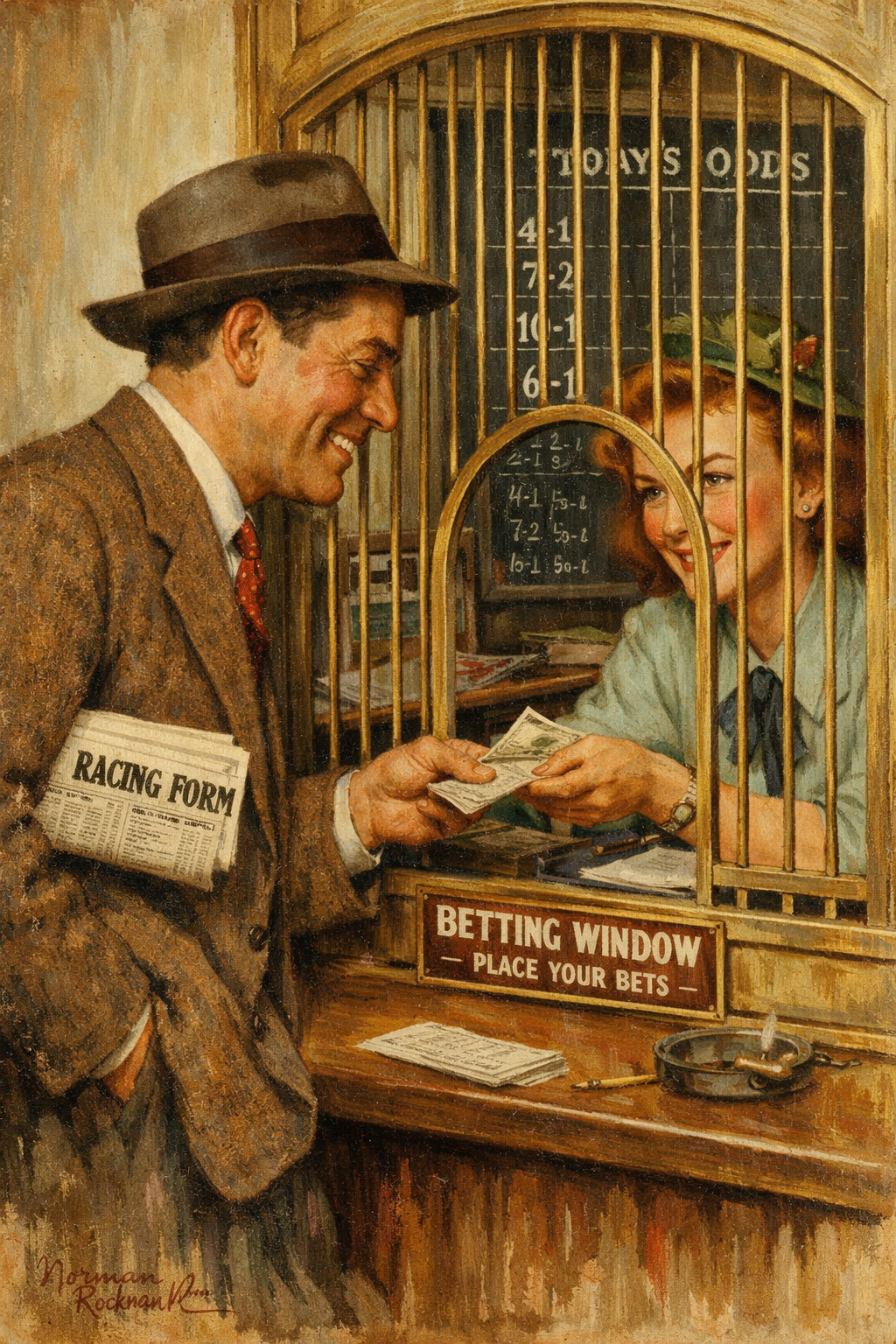
Modern horse racing offers a wide range of bet types, from simple “pick the winner” wagers to complex multi‑race strategies that require deep handicapping skill. Each bet type rewards a different approach, and the most successful bettors tailor their strategy to the structure of the wager.
🏇 1. Straight (Win/Place/Show) Bets
These are the simplest and most popular wagers.
Win
You’re betting on a horse to finish 1st.
Best Strategies
- Bet horses with a legitimate chance to win, not just run well.
- Avoid favorites below 2‑1 unless they are overwhelmingly superior.
- Look for improving horses (2nd off layoff, class drop, positive pace setup).
- Bet overlays—horses whose odds are higher than their true chances.
Place
Horse must finish 1st or 2nd.
Best Strategies
- Use place bets when:
- The favorite looks vulnerable
- Your horse is consistent but not dominant
- The field is small (less variance)
Show
Horse must finish 1st, 2nd, or 3rd.
Best Strategies
- Best in large fields where show payouts can spike.
- Avoid show betting heavy favorites—they depress the pool.
- Use when you want low‑risk bankroll preservation.
🧮 2. Exotic Single‑Race Bets
These bets involve predicting multiple finishing positions in the same race.
Exacta
Pick the 1st and 2nd finishers in order.
Best Strategies
- Key a strong horse on top with multiple underneath options.
- Use pace analysis:
- Lone speed → key on top
- Pace meltdown → closers underneath
- Avoid boxing short‑priced favorites—it kills value.
Trifecta
Pick 1st, 2nd, and 3rd in order.
Best Strategies
- Key one horse in the top spot and spread underneath.
- Use when:
- The favorite is strong
- The rest of the field is chaotic
- Look for longshots to hit the bottom of the trifecta.
Superfecta
Pick 1st through 4th in order.
Best Strategies
- Best in large fields with pace uncertainty.
- Use “caveman” spreads underneath a strong key horse.
- Look for:
- Troubled‑trip horses
- Improving 3‑year‑olds
- Horses switching surfaces or distances
Superfectas can produce life‑changing payouts in big races.
🧩 3. Multi‑Race Exotics
These require picking winners across multiple consecutive races.
Daily Double
Pick the winner of two consecutive races.
Best Strategies
- Identify one “single” (a horse you trust).
- Spread in the other leg.
- Avoid doubling chalk—value disappears quickly.
Pick 3
Pick winners of three consecutive races.
Best Strategies
- Use a single in one leg to keep ticket cost manageable.
- Target sequences with:
- Vulnerable favorites
- Large fields
- Maiden races with first‑time starters
Pick 4 / Pick 5 / Pick 6
Pick winners of four, five, or six consecutive races.
These are the most challenging and potentially lucrative bets.
Best Strategies
- Identify your strongest single—this is the backbone of the ticket.
- Spread in chaotic races (maidens, turf sprints, large fields).
- Fade vulnerable favorites—they destroy value.
- Use ticket‑structuring logic:
- “A” horses (likely winners)
- “B” horses (backup contenders)
- “C” horses (chaotic longshots)
The best players treat these bets like portfolio management, not gambling.
🧠 4. Horizontal vs. Vertical Betting Strategies
Vertical Bets (Exacta, Tri, Super)
Focus on one race.
Best strategies:
- Deep pace analysis
- Trip handicapping
- Identifying longshots to hit the board
Horizontal Bets (Pick 3–6)
Focus on multiple races.
Best strategies:
- Identifying singles
- Avoiding over‑spreading
- Targeting sequences with weak favorites
🎯 5. Bankroll Management Strategies
Regardless of bet type:
- Bet more when you have a strong opinion
- Bet less when the race is chaotic
- Avoid chasing losses
- Keep exotic wagers proportional to bankroll
- Use “pressing” strategies when you’re right
Smart bankroll management is often the difference between long‑term success and failure.
🧩 6. The Most Successful Overall Approaches
Across all bet types, the most consistently successful strategies include:
1. Pace Analysis
Understanding how the race will unfold is the #1 edge.
2. Class Evaluation
Spotting real vs. fake class drops is critical.
3. Trip Handicapping
Horses with bad trips often offer value next time out.
4. Identifying Vulnerable Favorites
The best value comes from beating weak chalk.
5. Using PPs to Spot Form Cycles
Key angles:
- 2nd off layoff
- Trainer intent
- Surface switches
- Distance changes
6. Ticket Structure
A good opinion with a bad ticket still loses.